Character.AI opened its beta built entirely on user-made personas
Character.AI's own account of its September 2022 beta names two former Google dialogue researchers and user-made characters.
- Historical event
- September 1, 2022
- First source published
- December 5, 2022
- Site publication
- September 18, 2026
What happened
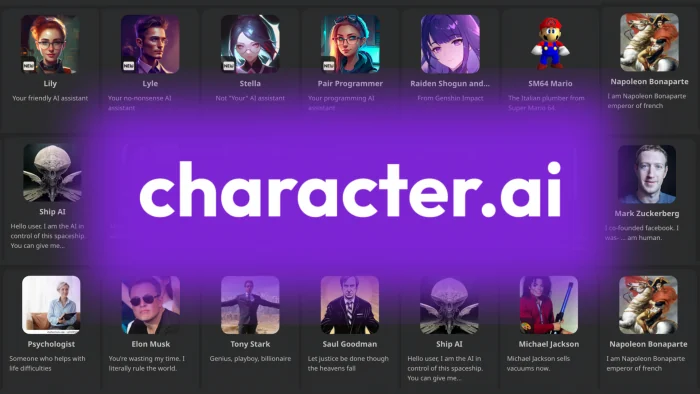
Character.AI opened to the public in September 2022, founded by Noam Shazeer and Daniel De Freitas, two engineers who had previously worked on Google's LaMDA and Meena dialogue research. The company's own account of this period appears in a December 2022 post, published after the beta had been live for roughly three months, describing early growth: over 350,000 user-created characters and, by the company's own count, a billion words of conversation generated per day.
What the documents show
The post is explicit that the founders' prior work is dialogue research, not a consumer-product background, and frames Character.AI as applying that research to a different problem: letting any user define a character rather than shipping one fixed assistant persona. It names examples of what people built — a life-coach character, a Socrates built for debate, a parody of a public figure for entertainment — presented as illustrations of range rather than a claim about typical use. The company's current about page, as retrieved in September 2026, still frames the mission as letting people 'connect, learn, and tell stories' through characters, and confirms the operating entity as Character Technologies Inc. Because the about page is a living document, it shows continuity of framing, not what changed in between.
The mechanism
The company's own character-creation documentation states that a character's responses are shaped by four things: the attributes a creator sets when defining it, training the character receives from star ratings on its conversations, a description of the persona the user is talking as, and the immediate conversation context. That is a different mechanism from a single, centrally authored assistant: the 'character' is closer to a configurable, ratings-tuned template than a fixed personality, and the same underlying model can present as many different characters as users, not the company, have written into it.
What it leaves open
The December 2022 post reports usage figures as the company's own count, with no independent audit cited among the documents opened for this record. Nor do the launch materials describe what content moderation applied to user-created characters at beta launch, a question later company posts, and separately, litigation, would return to. Treating the founders' research pedigree as a guarantee of safety design would be an editorial leap beyond what these sources state.
- Is a character a company-authored persona, or a template any user can define and retrain by rating?
- Are usage figures such as word counts independently verified, or self-reported?
- What moderation, if any, applied to user-created characters at the point of launch?
The mechanism that made Character.AI distinct from the research it grew out of was not a new model architecture but a new object: a character definition anyone could write, publish and refine through ratings. That shift, from one tuned assistant to millions of user-authored ones, is the detail worth carrying into any later record about the platform's growth, monetisation or safety changes.
Sources & reading trail
Names the September 2022 beta launch, the founders' LaMDA/Meena background, and early usage figures.
Source published: 5 December 2022 · Retrieved: 16 September 2026
Living document confirming current company framing and operating entity name, retrieved 2026-09-16.
Source published: Not established · Retrieved: 16 September 2026
Living document describing the four inputs (attributes, ratings training, user persona, context) shaping a character's replies.
Source published: Not established · Retrieved: 16 September 2026
Company documents, filings, studies and official records establish the record; the reading and the questions are Lovebot Journal editorial analysis. This retrospective draft does not imply the site published on the event date.
Continue reading
- Google announced a dialogue model built for open-ended chat
- Character.AI kept messaging free and sold speed instead
- A platform explains what a character definition controls
- Browse the complete the archive
Sources & reading trail
- Introducing Character
Source published: December 5, 2022 · Retrieved: September 16, 2026 - Character.AI — About
Retrieved: September 16, 2026 - Character Book — creating a Character
Retrieved: September 16, 2026
The documents above establish the record. The reading and the questions are this publication’s editorial analysis, written after the fact.
Published September 18, 2026, not on the date of the event described.