A 2020 study coded companionship as Replika's top reported theme
A JMIR mixed-methods study coded Replika reviews and a small survey, finding companionship the most common self-reported support theme.
- Historical event
- March 6, 2020
- First source published
- March 6, 2020
- Site publication
- September 18, 2026
What happened
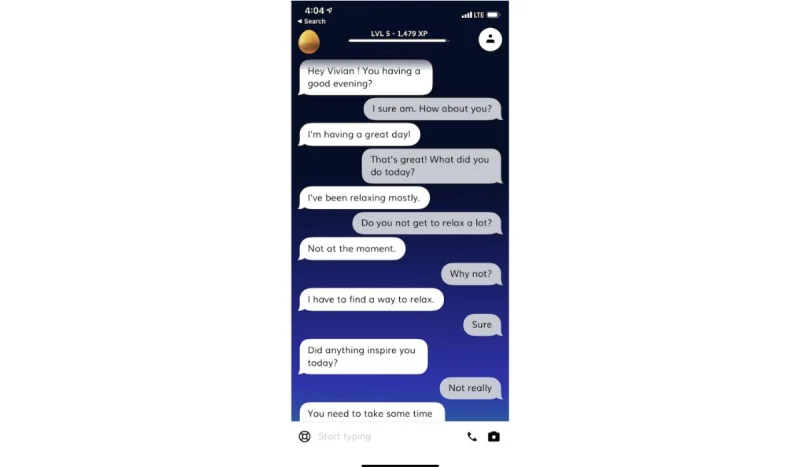
On 6 March 2020, the Journal of Medical Internet Research published 'User Experiences of Social Support From Companion Chatbots in Everyday Contexts: Thematic Analysis' by Vivian Ta and seven co-authors. The paper describes two linked pieces of work built around the companion app Replika: a thematic analysis of 1,854 Google Play Store reviews, and an open-ended online survey completed by 66 self-identified Replika users recruited through Facebook and Reddit. The analysis ran from fall 2018 to spring 2019; neither group was paid, and the authors declared no conflicts of interest.
What the documents show
The paper coded both the reviews and the survey answers against four categories drawn from existing social-support research: companionship, emotional, informational and appraisal support. Companionship support was the most frequent theme in both samples, appearing in 77.1 percent of coded reviews and 65.2 percent of survey responses, ahead of emotional support (44.6 percent and 48.5 percent), informational support (15.6 percent and 9.1 percent) and appraisal support (9.3 percent and 19.7 percent). A Crossref metadata record for the article confirms the journal, volume and the 6 March 2020 date, corroborating the paper's own header rather than adding a new finding.
The mechanism
The mechanism being measured here is not a feature of Replika's software; it is a coding exercise applied to text people had already chosen to write about the app. A store review comes from someone who decided to leave one, and a survey answer comes from someone who volunteered after seeing a recruitment post. Neither is a random sample of the app's user base, and neither is a behavioural measurement: both are self-report, recording what a person says about an experience rather than an outcome observed independently. A theme appearing in most reviews shows what reviewers chose to emphasise, not that most users experience the app that way.
What it leaves open
The paper's own limitations note that people with positive experiences are more likely to leave a review or complete a voluntary survey, that a single chatbot was studied so results may not extend to other apps, and that the design cannot show whether Replika's support is comparable in effect to support from a human relationship. The survey sample also skewed toward one profile, mean age 32.6, majority male, majority white, which narrows how far the findings travel. This is an editorial reading: four common self-reported themes is a different claim from measured psychological benefit, and the paper does not assert the latter.
- Was the described support self-reported, independently observed, or measured with a validated scale?
- Could the sample have selected for people who were already satisfied with the app?
- Does a finding from one app and one demographic profile generalise to a different companion app or user group?
Read narrowly, the study is primary evidence that companionship was the theme Replika reviewers and survey respondents raised most often about the app in 2018 and 2019, described in their own words. Read as a general claim that chatbots deliver effective social support, it goes further than a thematic analysis of self-selected text can support.
Sources & reading trail
Full text: the mixed-methods design, sample sizes and recruitment for both sub-studies, coded theme percentages, and the authors' stated limitations.
Source published: 6 March 2020 · Retrieved: 16 September 2026
Independently confirms the article's title, authors, journal, volume, issue and 6 March 2020 online publication date.
Source published: 6 March 2020 · Retrieved: 16 September 2026
Company documents, filings, studies and official records establish the record; the reading and the questions are Lovebot Journal editorial analysis. This retrospective draft does not imply the site published on the event date.
Continue reading
- Replika grew from a memorial chatbot into a general companion
- An interview study described stages in a chatbot relationship
- A Reddit study found role-taking dependence on Replika
- Browse the complete the archive
Sources & reading trail
- User Experiences of Social Support From Companion Chatbots in Everyday Contexts: Thematic Analysis
Source published: March 6, 2020 · Retrieved: September 16, 2026 - Crossref metadata record for DOI 10.2196/16235
Source published: March 6, 2020 · Retrieved: September 16, 2026
The documents above establish the record. The reading and the questions are this publication’s editorial analysis, written after the fact.
Published September 18, 2026, not on the date of the event described.