A Senate subcommittee heard parents and experts on chatbot harm
The September 2025 hearing record gathers testimony from parents, a psychologist and a children's media group.
- Historical event
- September 16, 2025
- First source published
- September 16, 2025
- Site publication
- September 18, 2026
What happened
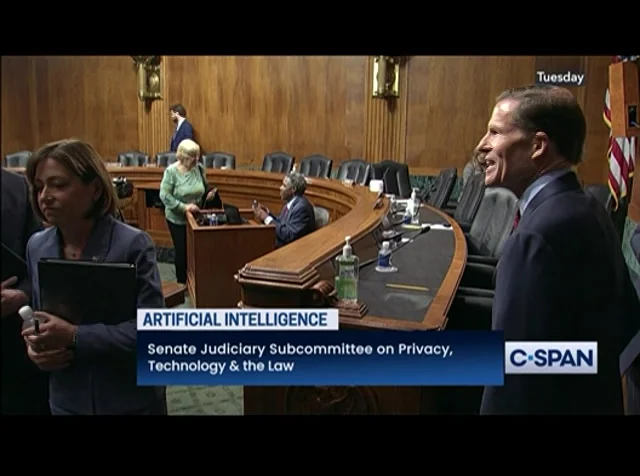
On 16 September 2025, the Senate Judiciary Committee's Subcommittee on Crime and Counterterrorism held a hearing titled Examining the Harm of AI Chatbots. The committee's own hearing page lists five witnesses: two parents identified as Megan Garcia and Matthew Raine, a mother identified only as Jane Doe, Robbie Torney of Common Sense Media, and Mitchell Prinstein of the American Psychological Association. Their written testimony is posted on the same page. A hearing record documents what was said and asked; it is not itself a law or a finding of fact.
What the documents show
Prinstein's written testimony states he appeared on behalf of the American Psychological Association, representing what he describes as over 173,000 psychologists, students and affiliates, and frames AI chatbots as tools whose effects on cognition, emotion and behaviour warrant psychological scrutiny alongside technical review. Torney's testimony, delivered as Common Sense Media's senior director of AI programs, opens by calling the risks to children 'not a theoretical problem,' citing prior news reporting and a contemporaneous Federal Trade Commission inquiry and a bipartisan state attorneys general letter as evidence other institutions were already acting. The hearing page itself, rather than either testimony, is the primary record of who was invited, when the hearing occurred and in which room.
The mechanism
A congressional hearing functions as an oversight and evidence-gathering mechanism: it lets a subcommittee build a public record, question witnesses under a formal format and signal legislative priorities, but it does not by itself change any law or regulation. Witness testimony, especially from advocacy organisations and affected parents rather than neutral experts alone, is submitted to persuade and inform, not to serve as adjudicated fact; APA's and Common Sense Media's written statements should be read as each organisation's professional position, not as independent findings reached by the committee.
What it leaves open
The hearing record does not itself establish that any specific chatbot caused any specific harm; the parents' testimony describes the same underlying cases discussed in the Garcia and Raine litigation records, which remain separately unresolved allegations. Nor does the hearing commit the subcommittee to any particular legislative outcome; hearings can precede bills that never advance, as well as ones that do.
- Did a hearing produce or merely precede any actual legislation or regulation?
- Is a witness testifying as an independent expert, an advocacy organisation, or an affected party?
- Does a cited 'hearing finding' actually appear in the record, or only in a witness's characterisation of other evidence?
As a document, the hearing record shows Congress formally engaging with companion and general-purpose chatbot safety through testimony from clinicians, a children's media nonprofit and affected parents, a step toward possible legislation rather than legislation itself.
Sources & reading trail
Official record of the hearing date, subcommittee, room and full witness list.
Source published: 16 September 2025 · Retrieved: 16 September 2026
APA's submitted testimony framing chatbot risk as a psychological-science question.
Source published: 16 September 2025 · Retrieved: 16 September 2026
Company documents, filings, studies and official records establish the record; the reading and the questions are Lovebot Journal editorial analysis. This retrospective draft does not imply the site published on the event date.
Continue reading
- A wrongful-death suit treated a companion app's persona as a product
- A lawsuit and a same-day statement described the same safety gap
- Testers found companion apps' teen guardrails easy to bypass
- Browse the complete the archive
Sources & reading trail
- Examining the Harm of AI Chatbots (hearing page)
Source published: September 16, 2025 · Retrieved: September 16, 2026 - Written Testimony of Mitchell J. Prinstein, PhD, ABPP, before the Senate Judiciary Committee
Source published: September 16, 2025 · Retrieved: September 16, 2026
The documents above establish the record. The reading and the questions are this publication’s editorial analysis, written after the fact.
Published September 18, 2026, not on the date of the event described.