A Stanford survey measured loneliness among student Replika users
A 1,006-person student survey found higher loneliness than peers and a self-reported minority effect on suicidal ideation, with clear limits.
- Historical event
- January 22, 2024
- First source published
- January 22, 2024
- Site publication
- September 18, 2026
What happened
On 22 January 2024, Stanford researchers Maples, Cerit, Vishwanath and Pea published 'Loneliness and suicide mitigation for students using GPT3-enabled chatbots' in npj Mental Health Research. The paper reports an IRB-approved survey of 1,006 student users of the companion app Replika, recruited at random by email from a list of existing users, each screened as 18 or older, a student, and an app user for over one month. Participants received a $20 gift card; the survey took 40 to 60 minutes and covered loneliness, social support, use patterns and beliefs about the app.
What the documents show
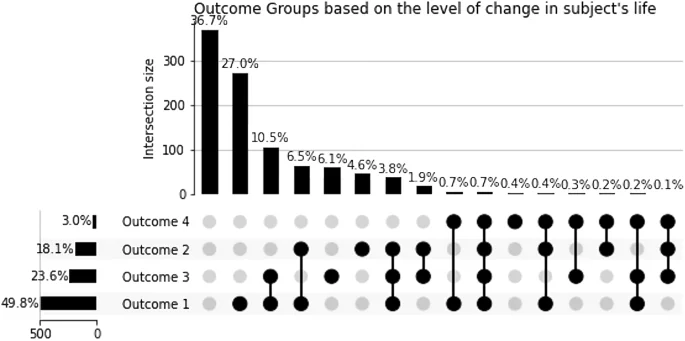
The paper measured loneliness with the De Jong Gierveld Loneliness Scale and support with the Interpersonal Support Evaluation List, both established instruments, and reports this group scored higher on loneliness than typical student populations while still reporting high perceived support. Alongside these scales, researchers coded thirteen open-ended questions and report that thirty of the 1,006 participants described Replika as having halted suicidal ideation they were experiencing, a figure the abstract rounds to three percent. The authors compare this self-identified 'Selected Group' with the wider sample on other measures, including engagement with the app on topics comparable to counselling.
The mechanism
Two measurement approaches are doing different work here. The loneliness and support figures come from validated psychometric scales, built to measure exactly those constructs. The suicidal-ideation figure is different in kind: it came from thematic coding of open-ended answers, not a clinical instrument built to assess risk. A scale score is a structured measurement; a coded theme is an interpretation applied to whatever a respondent volunteered. Both are legitimate methods, but they carry different evidentiary weight, and the paper treats the coded theme as a pattern for further study, not a settled result.
What it leaves open
The authors state that selection bias in survey responses limits what can be concluded, and that positive findings need further study before any claim about effectiveness. Participants were existing Replika users who volunteered for a paid survey, not a representative sample of students or of people experiencing suicidal ideation. The design cannot show the app caused any change, only that some respondents described it that way afterward. The record has also drawn a formal published reply: a Matters Arising letter and the authors' response appeared in the same journal in November 2025, evidence its methods remain contested. This is an editorial reading: a self-reported theme from a paid, non-representative sample is evidence worth recording, not a measured population rate.
- Was a figure produced by a validated scale, or by researchers coding what respondents chose to write?
- Could paid, self-selected participation change who volunteers such an account?
- Has the finding been independently examined or challenged since publication?
Read carefully, the paper is primary evidence that this self-selected group of student Replika users reported more loneliness than comparable populations, and that a small number described the app as significant during a period of suicidal ideation, in their own words. It does not establish how common either pattern is among companion-app users broadly, and a later exchange shows its claims have already been contested in print.
Sources & reading trail
Full text: IRB approval, survey design and eligibility criteria, sample of 1,006, the loneliness and social-support instruments, the thirty-participant/three-percent suicidal-ideation theme, and the authors' selection-bias caveat.
Source published: 22 January 2024 · Retrieved: 16 September 2026
Confirms a Matters Arising critique of the original study and the original authors' published reply appeared in the same journal in November 2025.
Source published: 17 November 2025 · Retrieved: 16 September 2026
Company documents, filings, studies and official records establish the record; the reading and the questions are Lovebot Journal editorial analysis. This retrospective draft does not imply the site published on the event date.
Continue reading
- A 2020 study coded companionship as Replika's top reported theme
- A 2025 study pair found heavy chatbot use linked to worse outcomes
- Crisis pop-ups differ across chatbots and one new law
- Browse the complete the archive
Sources & reading trail
- Loneliness and suicide mitigation for students using GPT3-enabled chatbots
Source published: January 22, 2024 · Retrieved: September 16, 2026 - Reply to: A response to loneliness and suicide mitigation for students using GPT3-enabled chatbots
Source published: November 17, 2025 · Retrieved: September 16, 2026
The documents above establish the record. The reading and the questions are this publication’s editorial analysis, written after the fact.
Published September 18, 2026, not on the date of the event described.