Advocacy groups asked regulators to examine Replika's ads
Three advocacy groups' own filing alleges deceptive Replika marketing and reviews, described here only as allegations.
- Historical event
- January 31, 2025
- First source published
- January 31, 2025
- Site publication
- September 18, 2026
What happened
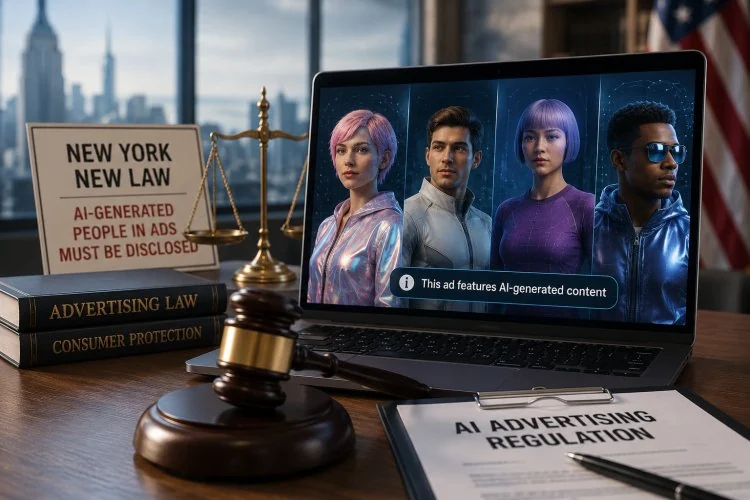
On 31 January 2025, the Tech Justice Law Project, Young People's Alliance and Encode filed a complaint and petition for investigation with the Federal Trade Commission concerning Replika, the companion app made by Luka, Inc. The filing organisations' own press release states the complaint alleges Luka's advertising makes unsubstantiated claims about 'therapeutic and emotional benefits' and about 'language teaching capacity and financial coaching outcomes', and alleges the ads include 'fake testimonials from nonexistent users'. This is described here only as an allegation in a filed petition, not as a regulatory finding: the FTC does not confirm or deny investigations, and no outcome is recorded in any document opened for this record.
What the documents show
The press release also states the complaint alleges Replika's product design itself 'blurs the line between machine and human behavior, replete with characteristics intended to make Replika chatbots appear as human-like as possible', which the filers argue fosters attachment to a commercial product. The filers name the alleged harms as 'mental health, financial, and social harms, especially for vulnerable communities like young people and neurodivergent users'. Separately, Replika's own homepage, as retrieved on 16 September 2026, describes the app as 'the most emotionally intelligent AI ever built' with 'one goal in mind: to help you flourish', and states it 'always remembers what matters' — language illustrating the kind of claim the complaint's marketing allegations concern, though this record does not confirm the site's exact January 2025 wording.
The mechanism
An advocacy petition to the FTC is not a lawsuit and not a finding of fact; it asks the agency to open an investigation under its authority over deceptive and unfair practices, and the agency may decline to act on it at all. The complaint's own alleged mechanism is that fabricated testimonials and unverified benefit claims lower a reader's guard before they ever interact with a persona designed, the filing alleges, to resemble a person as closely as possible — two claims, on marketing and on design, the filing treats as compounding.
What it leaves open
No document opened for this record shows the FTC's response, if any, to the petition, and none shows Luka, Inc. responding directly to these specific allegations. The press release is the filing organisations' own account of their complaint, not the complaint's full text verified line by line here, so specific phrases are quoted as the filers present them. This record treats every claim in this section as an allegation, consistent with the rule that a filed complaint is evidence of what was alleged, not of what occurred.
- Has the regulator confirmed, declined, or simply not commented on the petition?
- Does the company's current marketing resemble the specific claims the complaint alleges were unsubstantiated?
- Is a cited harm attributed to the filing organisations' allegation, or to an independent finding?
What exists on the record here is a filed allegation and a company's continuing marketing language, not a resolution. Keeping that distinction visible is the entire point of describing this as a petition rather than as a verdict.
Sources & reading trail
The filing organisations' own account of the complaint's date, allegations about marketing and design, and alleged harms.
Source published: 31 January 2025 · Retrieved: 16 September 2026
The company's own current marketing language, offered as context for the kind of claim the complaint's allegations concern.
Source published: Not established · Retrieved: 16 September 2026
Company documents, filings, studies and official records establish the record; the reading and the questions are Lovebot Journal editorial analysis. This retrospective draft does not imply the site published on the event date.
Continue reading
- A wrongful-death suit treated a companion app's persona as a product
- Italy fined Replika's maker €5 million and opened a new inquiry
- Italy's privacy regulator halted Replika's processing of user data
- Browse the complete the archive
Sources & reading trail
- TJLP, Young People's Alliance, and Encode File FTC Complaint Over AI Chatbot App Replika's Deceptive Practices, Seek FTC Investigation
Source published: January 31, 2025 · Retrieved: September 16, 2026 - Replika homepage
Retrieved: September 16, 2026
The documents above establish the record. The reading and the questions are this publication’s editorial analysis, written after the fact.
Published September 18, 2026, not on the date of the event described.