Gatebox's hologram companion became a licensed-character display maker
Gatebox's own pages describe a 2016 display device and a shift toward crowdfunded, licensed-character products.
- Site publication
- September 18, 2026
What happened
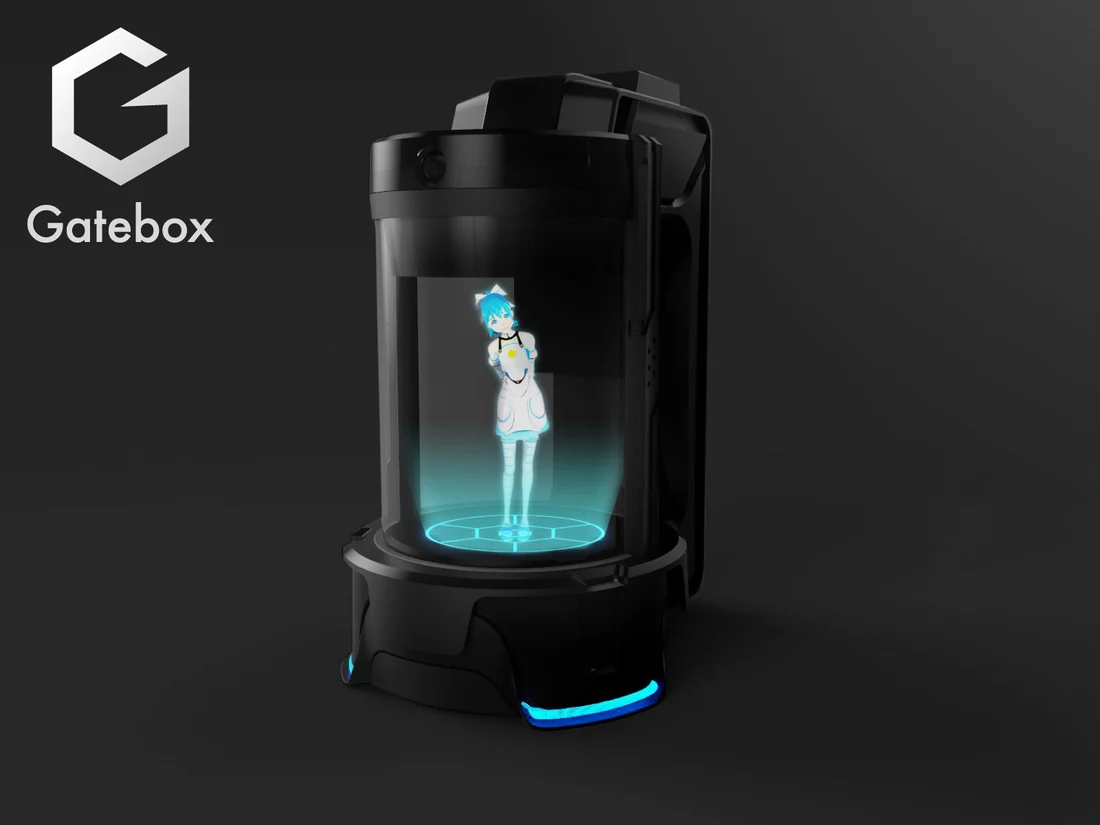
Gatebox, a Japanese company founded on 14 February 2014, built its business around a device it calls a 'character summoning display.' Its own company page states that in 2016, in a market where 'physical communication robots and smart speakers were the norm,' the company's original device proposed a new concept, living with a virtual character, and 'was picked up by media around the world.' The company's current homepage and its page for Gatebox3 describe a different present-day business: digital-figure merchandise tied to licensed anime characters, and a next-generation display crowdfunded through the platform Makuake. This description reflects those pages as retrieved on 16 September 2026.
What the documents show
The about page states the company's vision as 'Living with Characters' and describes its device as making 'a favourite character appear like a hologram,' pursuing 'a sense of real presence.' The homepage confirms this same framing is still used for Gatebox3, calling it a device to make characters 'appear as if they truly exist before you.' None of the three pages names a specific launch date more precise than '2016' for the original device, nor do they state what happened to that original product line commercially; the current storefront sells digital-figure products for licensed franchises and pre-orders for Gatebox3, without describing the original device as either continued or discontinued.
The mechanism
The mechanism across both eras is the same: a dedicated physical display creates an illusion of a character's presence in a fixed location in the home, distinct from a phone app's AR overlay, which requires holding up a camera, or a voice assistant with no visual form at all. What has changed is the business model built around that mechanism, from what the company's own history describes as a single communication device toward crowdfunded hardware paired with sales of licensed digital collectibles tied to existing anime properties, a shift toward merchandising rather than a single owned character.
What it leaves open
The pages reviewed do not explain, in the company's own words, why the business shifted from its original device toward digital-figure products, nor confirm whether the original 2016-era product remains supported. This is a gap in the documents themselves, not a conclusion this record draws about the company's reasons.
- Does a company's current homepage describe continuity with, or replacement of, an earlier flagship product?
- What happens to owners of an original device when a company's business model visibly shifts?
- Is 'presence' created by dedicated hardware different, for a user, from presence created by a phone app?
Gatebox's own pages document a consistent idea, a character made to feel present in a room, pursued through two different products and business models a decade apart.
Sources & reading trail
Company's own account of the 2016 device's media reception and the current business description.
Source published: Not established · Retrieved: 16 September 2026
Describes the current 'character summoning display' business and digital-figure product line.
Source published: Not established · Retrieved: 16 September 2026
Describes Gatebox3 as the next-generation model of the same hologram-style display concept, crowdfunded.
Source published: Not established · Retrieved: 16 September 2026
Company documents, filings, studies and official records establish the record; the reading and the questions are Lovebot Journal editorial analysis. This retrospective draft does not imply the site published on the event date.
Continue reading
- VRM and Live2D encode different rules for who owns a digital face
- LOVOT sells affection with a price tag and a required subscription
- A companion robot went silent when its maker closed
- Browse the complete the archive
Sources & reading trail
- ABOUT
Retrieved: September 16, 2026 - Gatebox株式会社
Retrieved: September 16, 2026 - Gatebox3
Retrieved: September 16, 2026
The documents above establish the record. The reading and the questions are this publication’s editorial analysis, written after the fact.
Published September 18, 2026, not on the date of the event described.