LOVOT sells affection with a price tag and a required subscription
Groove X's and LOVOT's own pages describe a robot built only for affection and sold with a required monthly fee.
- Site publication
- September 18, 2026
What happened
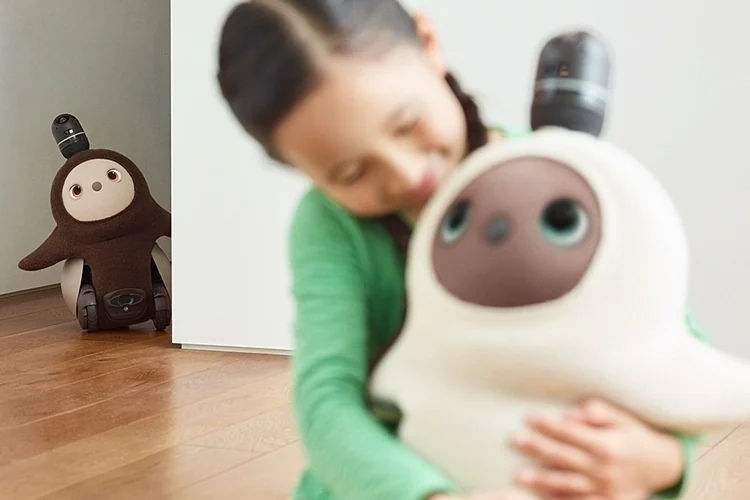
The Japanese company GROOVE X states on its own site that it introduced the robot LOVOT in 2019, describing it as a 'Slow-Relation Robot.' Its product site states plainly that 'LOVOT was born for just one reason, to be loved by you.' The company's English product page and its current pricing page, both retrieved on 16 September 2026, describe what the robot does and what it costs today.
What the documents show
GROOVE X's page states LOVOT 'recognizes and remembers each family member's face' and responds 'to your subtle gestures in real time,' running on hardware it names as an NVIDIA Jetson Orin NX in the current LOVOT 3.0 model; the company also states more than 10,000 units are active with a self-reported retention rate above 90 percent after three years. The English product page adds that LOVOT carries touch sensors across its body, a 'Sensor Horn' for perceiving its surroundings, and warmth 'close to body temperature,' and that it receives updates through a cloud connection. The pricing page, a living document, states LOVOT is sold either outright or through installment financing, and separately requires a monthly 'cost of living' service fee, ranging from 9,900 to 19,800 yen depending on plan, which the company states covers both the software needed for the robot 'to be active every day' and a repair-coverage plan called LOVOT care.
The mechanism
LOVOT is designed to perform no task at all, no cleaning, no answering of factual questions, and its stated value rests entirely on prompting a caregiving response through cues such as warmth, gaze, and gesture recognition. That design choice is paired with a business structure that separates a financed hardware purchase from a mandatory, recurring software fee; the company's own pricing page states the monthly fee funds the software the robot needs to operate day to day and to back up its accumulated 'memory and personality.' A robot built to be loved, in other words, depends on a continuing subscription relationship with its maker for its personality to persist at all.
What it leaves open
The pages reviewed do not state what happens to a LOVOT's stored memory or personality if the monthly service fee lapses or if GROOVE X were to discontinue the service. The retention and satisfaction figures GROOVE X cites are the company's own survey data, not an independently conducted study.
- What happens to a companion device's memory or behaviour if its maker's service fee goes unpaid?
- Are a company's own retention and satisfaction statistics independently verified, or self-reported?
- Does a device marketed as a one-time purchase actually depend on an ongoing subscription to function?
LOVOT's own pricing structure makes explicit what many software-dependent companions leave implicit: the object is financed once, but its personality depends on a fee paid every month.
Sources & reading trail
States LOVOT's 2019 introduction, its sensors, and the company's description of a 'slow-relation robot.'
Source published: Not established · Retrieved: 16 September 2026
Describes LOVOT's touch sensors, warmth, and cloud-dependent software updates.
Source published: Not established · Retrieved: 16 September 2026
States the required monthly service-fee plans and what they cover, including software use and repair coverage.
Source published: Not established · Retrieved: 16 September 2026
Company documents, filings, studies and official records establish the record; the reading and the questions are Lovebot Journal editorial analysis. This retrospective draft does not imply the site published on the event date.
Continue reading
- A robot seal cleared US regulation years before its trial data arrived
- Gatebox's hologram companion became a licensed-character display maker
- Tamagotchi proved a feeding loop could sell for decades
- Browse the complete the archive
Sources & reading trail
- GROOVE X
Retrieved: September 16, 2026 - LOVOT
Retrieved: September 16, 2026 - LOVOTの価格
Retrieved: September 16, 2026
The documents above establish the record. The reading and the questions are this publication’s editorial analysis, written after the fact.
Published September 18, 2026, not on the date of the event described.