Meta hired celebrities to voice AI characters, then moved on
Meta's 2023 launch names celebrity-embodied AI characters; its 2024 follow-up shifts the product to user-made ones instead.
- Historical event
- September 27, 2023
- First source published
- September 27, 2023
- Site publication
- September 18, 2026
What happened
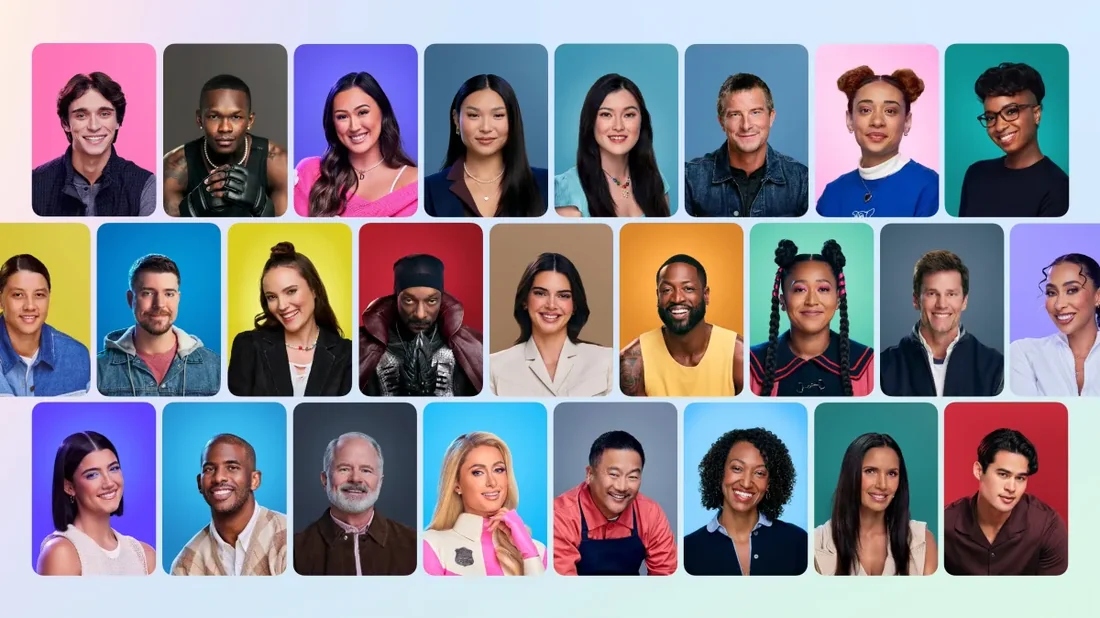
On 27 September 2023, Meta announced 28 AI characters across WhatsApp, Messenger and Instagram, stating that it had partnered with 'cultural icons and influencers to play and embody some of these AIs.' Named examples in the announcement include Snoop Dogg as a Dungeon Master character, Tom Brady as a sports-commentary character called Bru, and Kendall Jenner as a companion character called Billie, among others voiced by Naomi Osaka, MrBeast, Paris Hilton and further public figures.
What the documents show
The 2023 announcement discloses a specific limitation: it states the characters' knowledge 'is limited to information that largely existed prior to 2023,' with named exceptions — Meta AI, Bru and a character called Perry — given real-time search access instead. Less than a year later, Meta's 29 July 2024 announcement of AI Studio describes a different model entirely: a tool letting anyone build, share and discover custom AI characters, available on the same three messaging surfaces. That post does not mention the 2023 celebrity roster, does not use the word discontinue, and does not explain what happened to the earlier characters; it introduces a user-generated alternative built on the same distribution channels.
The mechanism
The 2023 product's mechanism was licensed persona: a public figure's likeness attached, by agreement, to a scripted character concept, distinct from the celebrity generating replies. AI Studio's mechanism is closer to a user-defined template: any user supplies the persona description and Meta's underlying model generates replies in that voice. The difference matters because a licensed celebrity persona carries obligations — consent, likeness rights, presumably a commercial arrangement — that a user-authored persona does not, and only one of the two mechanisms depends on a continuing relationship with the named individual.
What it leaves open
Neither document states whether Meta formally ended the celebrity partnerships, renegotiated them, or simply let AI Studio supersede them in practice; this record does not assert a discontinuation date because neither opened source provides one. Readers who have seen the September 2023 characters described elsewhere as retired around mid-2024 should treat that as unconfirmed by Meta's own materials as opened here; it is presented as an open question, not a documented fact.
- Is an AI persona licensed from a named public figure, or authored by whoever is using it?
- Does a platform state when and why a licensed persona was withdrawn, or does it simply stop appearing?
- What obligations, if any, follow a company after a celebrity-licensed AI product winds down?
What is documented is a sequence: a licensing-heavy launch, then, within a year, a self-service alternative on the same surfaces. Whether that sequence represents a reversal, a quiet retirement, or simply an additional product sitting alongside the first is not something Meta's own posts, as opened for this record, resolve.
Sources & reading trail
Names celebrity-embodied AI characters and discloses a 2023 knowledge cutoff for most of them.
Source published: 27 September 2023 · Retrieved: 16 September 2026
Introduces a user-generated AI-persona tool on the same platforms, without referencing the 2023 celebrity roster.
Source published: 29 July 2024 · Retrieved: 16 September 2026
Company documents, filings, studies and official records establish the record; the reading and the questions are Lovebot Journal editorial analysis. This retrospective draft does not imply the site published on the event date.
Continue reading
- Meta let anyone build a labelled AI character across its apps
- Meta gave its assistant five actors' licensed voices, not clones
- A new law sets a timer on AI disclosure, not just wording
- Browse the complete the archive
Sources & reading trail
- Introducing AI-Powered Assistants, Characters and Creative Tools
Source published: September 27, 2023 · Retrieved: September 16, 2026 - Create Your Own Custom AI With AI Studio
Source published: July 29, 2024 · Retrieved: September 16, 2026
The documents above establish the record. The reading and the questions are this publication’s editorial analysis, written after the fact.
Published September 18, 2026, not on the date of the event described.