Meta hired celebrities to voice AI characters, then moved on
Meta's 2023 launch names celebrity-embodied AI characters; its 2024 follow-up shifts the product to user-made ones instead.
Read piece →Topic shelf · 18 records
Embodiment, synthetic presence, and the mechanics behind a character surface.
This shelf follows the extra product constraints introduced by speech, timing, synthetic identity, animation, and visual embodiment.
Meta's 2023 launch names celebrity-embodied AI characters; its 2024 follow-up shifts the product to user-made ones instead.
Read piece →OpenAI's own account says it paused the Sky voice on 19 May 2024 after Scarlett Johansson objected, without confirming imitation.
Read piece →OpenAI's own announcement and system card, plus reporting on the September rollout, show what the company flagged about voice and attachment.
Read piece →Replika's help pages and store listing set out what Free Use, Pro, Ultra and Platinum unlock, as retrieved on 16 September 2026.
Read piece →Hume's own documentation describes prosody measurement and an empathic model, not detection of felt emotion.
Read piece →Sesame's research post describes a model built for voice presence and commits key components to an open license.
Read piece →ElevenLabs' documentation and terms describe agent voices, cloning, and the consent language that governs them.
Read piece →Meta's announcement named five actors whose AI voices became selectable, distinct from a cloned voice.
Read piece →Replika's own help pages describe AR and headset modes as beta features layered onto a text-based companion.
Read piece →The VRM specification and Live2D's licenses show how differently each format records who may use an avatar.
Read piece →Accessibility testing should cover modality switching, transcripts, correction and pacing—not just whether speech recognition works in a quiet room.
Read piece →A phone, a spreadsheet and a fixed script can separate network delay, response generation and speech playback without pretending to be a laboratory.
Read piece →Creators need evidence of who authorized an identity, for which uses, for how long, and what happens when permission ends.
Read piece →Reduced motion, literal language, predictable controls, adjustable pacing and reversible steps make companionship more accessible without making it cold.
Read piece →The 2024 rollout joined voice selection, interruption, and text switching into one interaction loop.
Read piece →Scenes, animation, profiles, and feeds suggest a platform mechanics shift: characters become reusable media objects.
Read piece →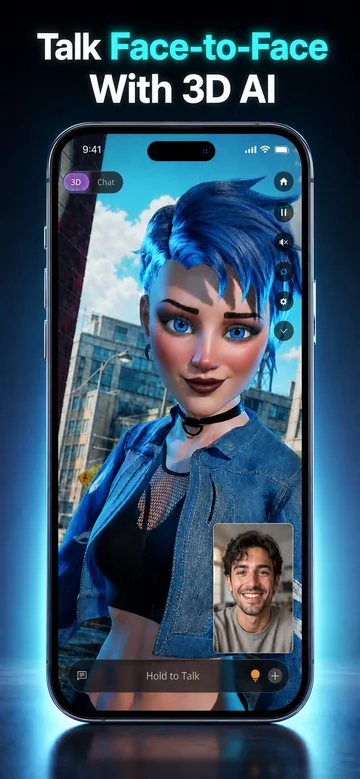
The developer’s App Store listing describes animated characters, voice and text, creation tools, worlds, and group interaction.
Read piece →
Animation Inc. describes real-time generative animation, while its companion page foregrounds a character’s ongoing presence.
Read piece →